It’s not difficult these days to research questions around how things work.
I recently taught myself how to use diesel fuel mixed with used motor oil to create a great stain for my deck. All by watching a few YouTube videos. It looks great. My wife hates the ‘truck stop’ smell, but there’s something satisfying about doing it smarter.
You can become a pretty good self-directed investor these days, thanks in part to the freely available information you can access on social media. The best place to start is personal finance – this is the foundation for wealth. Take an online course, like this one, or read some good books like the Barefoot Investor. Most advice, which I agree with for the most part, would suggest making a start using low-cost index funds. Set up some automated investments out of your account an into a ‘stew’ of a bunch of things all in one go. Forget the market turmoil, turn off the news, and bury your head in the sand around items you can’t control. Now, about this time, I should pause, and, on behalf of the entire investment industry, I thank you for your business.
After a while, you may be ready to start learning about the other approaches.
Start with reading or downloading the audio book of some of the classics like The Intelligent Investor by Benjamin Graham, or One Up on Wall Street by Peter Lynch. Consider speaking with financial advisers, or figure out a way to become the best DIY investor you can be – it’s up to you – it’s your money.
An active approach to investing can sometimes compliment a curious mind which is anchored in an explicit strategy. For many, it IS possible to get better than average returns. You need not worry about things you can’t control, but if you’re curious about how things work, consider your position, in relation to it all.
Whether you’re a property investor, you’re thinking about interest rates, because you know it affects property prices, and makes everything easier. If you’re into technology and how money works, you can learn about what’s going on in the area of crypto. Build your own investment strategy or rely on the expertise of others – again, you choose, because it is your money after all. Macro economics, geopolitical issues, cyclical and secular trends – your understanding of what these things mean can make all the difference between success or failure.
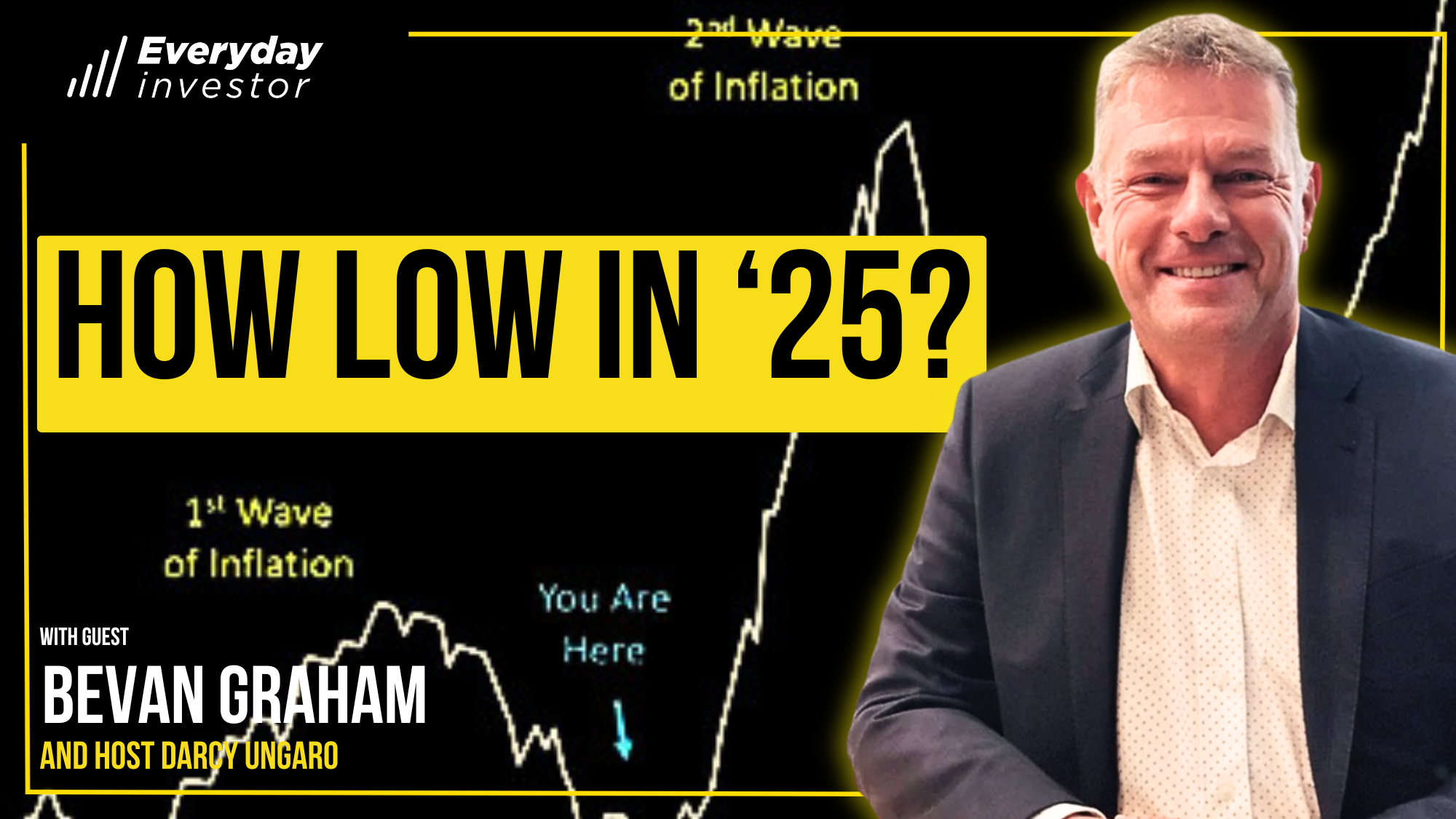
In a recent conversation, I was trying to resolve a graph of three waves of inflation. Today isn’t exactly the same as it was in the late 70’s but it’s close enough to have me wondering: What would happen if interest rates didn’t keep falling the way many of use are hoping?

I’m personally now of the view we’ll see 1% fall off the official cash rate between now and the first half of next year. Central banks globally aren’t exactly known for their clairvoyance when it comes to economic predictions, which, along with a myriad of other factors, leaves me pondering what comes next.
Check out my conversation with Bevan Graham, former chief economist at AXA Global Investors, AMP Capital, and now Salt Funds.
There’s no doubt over the next 2-3 Reserve Bank of NZ ‘conclaves’, that we’ll see rates falling, but what if, from mid next year onwards inflation comes back? There’s a growing list of reasons why this could occur.
Whether it’s shares or property, interest rates affects our net worth. Wouldn’t it be great to know where they’re heading?
No one knows the future, but with the right clues…