Gold is on the move, and it’s not just a market blip.
Central banks are stockpiling it, countries are yanking it back from foreign vaults, and the U.S., once a gold exporter, is now a massive importer, rivaling World War II levels. From Germany to Turkey, nations are repatriating their gold from the New York Fed and Bank of England, trading liquidity (or the ability to move it around and trade for other things easily) for custody (In Bitcoin-land, we say ‘not your keys, not your coins’, but with Gold, he who holds it, makes the rules). Meanwhile, the BRICS nations are crafting a gold-backed, blockchain-based currency system*. This isn’t nothing, This is in fact, quite something. A monetary reset – and the everyday investor, distracted by Bloomberg headlines, AI and Bitcoin hype, has no idea. Skeptical?
*The BRICS alliance—Brazil, Russia, India, China, South Africa, and newer members like Egypt, Ethiopia, Iran, Saudi Arabia, and the UAE—is pushing a transformative idea: linking their Central Bank Digital Currencies (CBDCs) through a blockchain-based platform called the Bridge (formerly mBridge). This initiative aims to create an independent, efficient, and sanction-resistant payment system to rival the U.S. dollar-dominated SWIFT network, reduce reliance on the dollar (de-dollarization), and enhance economic sovereignty.
Gold is on the move, and this might be why:
BIS’s Trojan Horse: Cooperation at the Top
Right now, it’s not about interest rate cuts. While the worlds looking at the game (nation states), no one’s watching the ball (money). This is all about power in financial world. The Bank of International Settlements (BIS)**, the central bank of central banks, lit the fuse in 2017 by reclassifying gold as a Tier One asset. It was a green light for central banks to ditch treasuries and load up on gold. Looks a lot like cooperation at the highest levels. Do central banks know a reset is coming, whether it’s gold-backed treasuries or a new Bretton Woods arrangement***?. The BIS’s move feels like a Trojan horse, which slipped past the gates of the old system. When will normies catch on? Not yet. The mainstream’s too busy being scared. Never mind the fact you ‘don’t like gold’, and yes, it sounds like conspiracy theorist rants or doomer gloom, but why did the Bank of International Settlements reclassify gold as the only other Tier One reserve asset? Clearly they’re setting rules central banks follow.
So if Gold is so awesome, how come we don’t hear much about it in the West? How much is the financial services industry steering the narrative? It appears to be quite a lot. Mainstream media hypes Bitcoin nine times more than gold, despite gold’s 40% surge last year. It’s pretty jarring, especially when returns on the S&P v Gold are neck and neck – why would you take the risk if Gold is money?
**The Bank of International Settlements (BIS), the central bank of central banks, defines reserve assets: High-quality, liquid assets held by central banks to back their balance sheets and ensure financial stability—by setting global banking standards like the Basel Accords. In 2017, the BIS reclassified gold as a Tier One reserve asset, elevating it from Tier Three (where only 50% of its value counted) to the highest tier, meaning it’s valued at 100% on balance sheets, free of counterparty risk, and immune to sanctions, unlike other assets. The only other Tier One reserve asset is U.S. dollars and U.S. treasuries, which have dominated since the Bretton Woods Agreement due to the dollar’s world reserve currency status.
***The Bretton Woods Agreement, started in July 1944 in New Hampshire, and was a global monetary framework where 44 Allied nations agreed to peg their currencies to the U.S. dollar, which was convertible to gold at $35 per ounce, cementing the dollar as the world reserve currency to stabilize post-World War II economies. It birthed the IMF and World Bank to manage exchange rates and reconstruction, relying on gold’s sound money credibility. The system fueled growth but broke under U.S. trade deficits (Triffin’s Dilemma), prompting President Nixon to halt gold convertibility in 1971, ending the gold window and ushering in fiat money. In many ways, this is when the troubles began.
BRICS’ Steam Engine: A Gold-Backed Alternative
BRICS—Brazil, Russia, India, China, South Africa, expanded to include Egypt, Ethiopia, Iran, Saudi Arabia, and the UAE. It’s a geopolitical and economic bloc representing over half of global GDP, population, and commodities.
SWIFT (Society for Worldwide Interbank Financial Telecommunication) is a global messaging network that facilitates secure, standardised financial transactions, primarily in U.S. dollars, between banks and institutions across over 200 countries.
I view SWIFT as the clunky, steam-powered engine driving the dollar’s global hegemony, processing transactions across 200+ countries but now facing a sleek, electric rival in BRICS’ Bridge platform, which uses blockchain to settle CBDC trades in seconds, pushing for a de-dollarised future.
When the US kicked Russia out of the SWIFT financial system shortly after their Ukraine invasion, I wondered about the logic. It seemed like a really dumb move if you’re trying to keep your financial system strong. The BRICS’ Bridge platform could settle 40% of global trade with a 40% gold-backed currency. Are Western bankers blind, or is this a predetermined plan to force dollarisation? As the value of the USD (and most of the Western world) declines, the price of gold would in theory, sky rocket. Is this why mainstream news doesn’t cover it as much as doomer YouTubers?
Self-Custody for the Win: Sound Money Matters
For everyday investors like you and me, I think this should be basic hygiene. 20% of your wealth should sit in self-custodied ‘sound money’. 80% we invest in ‘normal’ things like shares, fixed interest, commercial and residential property. For the rest however, we don’t invest it – we save it. Precious metals like gold and silver held in a secure vault, and Bitcoin held in your own wallet are forms of money unable to be stolen by government, or printed away by central banks.
Are unallocated gold ETF’s risky? Maybe, maybe not – it depends on how much you believe in a currency reset. I hold a gold ETF (exchange traded fund) which has the option to pay out in cash, instead of delivering gold. In a raging bull market, my concern is that it effectively caps the upside gain on gold. If the levee breaks (alleged price suppression) paper promises [,units of ownership in a fund that tracks the price of gold, or provides unallocated exposure] won’t cut it. Unless these are conspiracy theories, physical possession is king in a financial reset. If the unit that denominates your wealth becomes useless, then what happens to your wealth? It’s a scary question to ask when you’re dependent on third parties like J.P. Morgan and BlackRock.
Tariffs as Weapons: 5D Chess Move?
If tariffs aren’t taxes, but sanctions, or financial weapons in a global power struggle. Why are they being used right now? Is the U.S. tanking the dollar to dodge its world reserve currency burden, with its Triffin’s Dilemma of endless trade deficits? Or are they setting up BRICS as the villain for a currency reset? It’s 5D chess, and some bankers are known to play the long game. With $28 trillion in treasuries due by 2028 and only $5 trillion in yearly revenue, the U.S. is insolvent. A reset—whether by inflation or default—is looming, and gold could be the anchor going forward (either as part of the East, or the West).

Gold and silver have been wealth since Jesus’ time and earlier, surviving wars, depressions, and hyperinflations. I’m intrigued to see how Bitcoin performs in this environment, but as for a currency reset, the historical performance of precious metals is unmatched. From Roosevelt’s 1933 gold revaluation to Nixon’s 1971 gold window closure. What’s so special about our generation, that we get to ignore this?
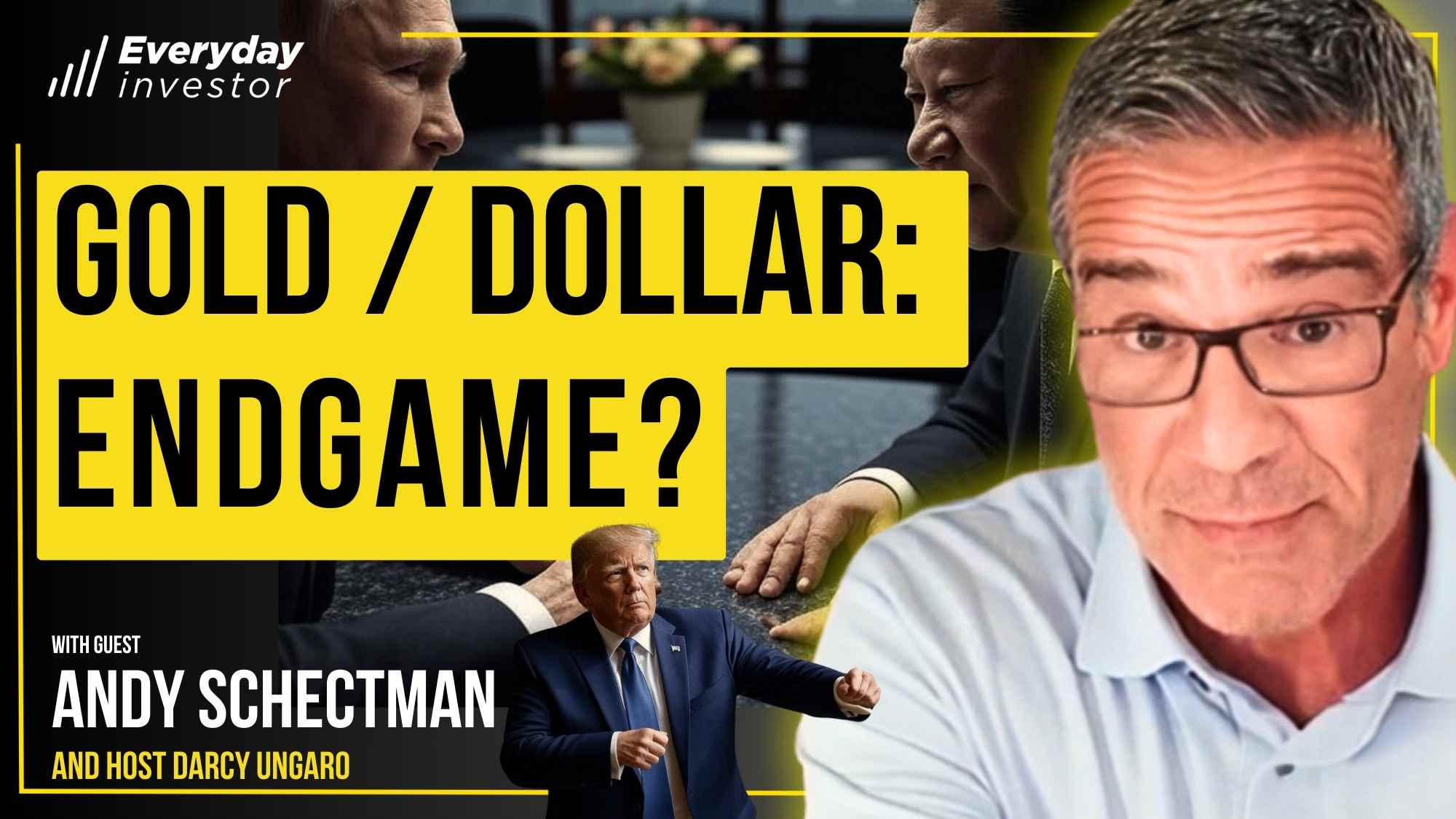
The sophisticated money—central banks, and ultra-high-net worth people…they know what’s going on, and they’re piling into gold at record rates. Andy Schectman recently told me that by July 2026, gold could hit $6,000, and silver $142. This isn’t as much as others I’ve spoken to, but the future’s looking…shiney?
Disclaimer: I recommend most investors consider an allocation to alternative forms of sound money, not as investments, but as a portion of their savings. ‘Trading’ precious metals can be risky and for the long-term wealth builder, proceed with caution there. This episode should not be considered personalised financial advice, as I don’t know your circumstances.