At 5:30pm on a Friday night, I wanted to chip in for a friend’s birthday present. I couldn’t – the bank was offline. Most of the banks were offline. I dug a little deeper, discovered banks, airports, and other essential services were offline.
Is THIS, the end of the world?
I better change my underwear, stock up on toilet paper, and most importantly, renew my subscription to the resurrection.
The Cloudstrike fiasco from 19/07/24 disrupted banking, travel, emergency services, and more. It was indeed significant, but thankfully, it didn’t in fact result in the arrival of any apocalypse. What it did do however, was remind me the best time to be prepared, is BEFORE bad things happen.
When we have our jobs, our family, and our health, there’s very little incentive to prepare for negative events. My non-doomer-headspace is blissful, but it’s ignorant too. Even right now, it’s hard to appreciate just how badly the world is on fire right now. Elections, wars, famine, disease, and all the uncertainty that exponential change brings forth.
If the end isn’t nigh, it’s certainly near.
The future contains both the utopian’s bad dream, and the dystopian’s pleasant surprise though, so we should consider both the positive, and the negative version of the future when we invest.
So how do we invest in a new world containing measures of terror and promise?
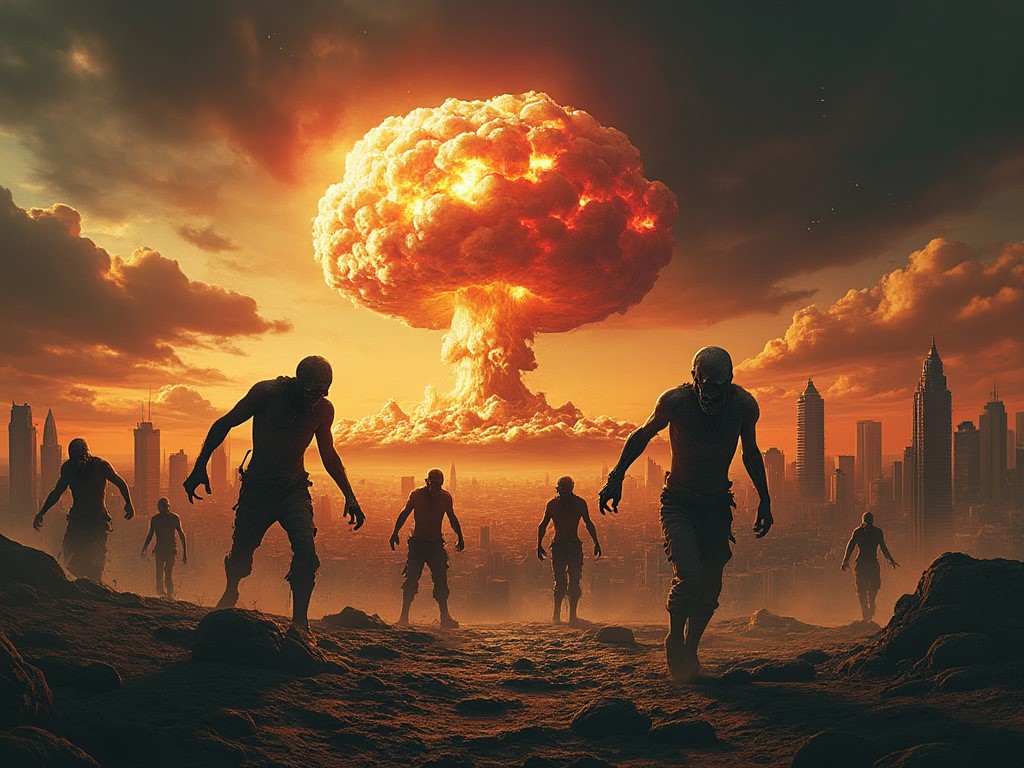
Well, this could be terrible financial advice for some people, but for entertainment purposes alone, allow me to introduce the 80/20 Zombie Apocalypse portfolio. A way to invest based on best practice, with slight ‘tilt’ towards something valuable during a worldwide financial collapse.
‘Step one’: Invest 80% into a portfolio containing some mainstream ‘income’ investments like cash and fixed interest (bonds), and some ‘growth’ investments like shares, commercial property, and infrastructure assets. Most KiwiSaver funds will aim to blend growth and income investments together, to provide a good long-term return without too many unpleasant surprises along the way.
Providing the world keeps doing what it’s always done, a ‘mainstream’ strategy like this can be a great way to help fund your retirement.
But what if the future isn’t like it was in the past?
Warning: Be prepared to consider ‘extremist’ views at odds with the grey-haired, tea-drinking, cardigan-wearing boomers who’d like you to know, they really know better.

4 years ago we were reminded the world can in fact change in the twinkling of an eye. Economies were shut down at the same time we were given access to credit at much lower interest rates for [arguably] way too long. Then came the inflation, higher interest rates, and then wars broke out. It’ll most likely settle down, but what if it doesn’t? What if war gets worse, or the world doesn’t buy the debt the US issues? What happens if the US is no longer the world’s superpower? What if we get higher interest rates for longer, when we’re all expecting lower and sooner?
What happens if your investment accounts are all replaced with a blue screen of doom?
Let’s be real, these aren’t unlikely events, and nobody in mainstream finance really has any incentive to warn you.
Systemic failures affecting the internet, operating systems, or power grids are types of risks that have the potential to destroy the wealth we’ve already built. What good is the 60/40 portfolio when the zombies strike first? We need to consider a strategy to profit by holding things considered useful during a [financial] zombie apocalypse.
‘Step two’: Hold 20% of your portfolio in alternative forms of money. One digital, and the other analogue.
Analogue money like physical gold (and silver), because it’s been used as money for over 5,000 years, and digital money like Bitcoin, because it may form part of new financial system of the future.
You don’t have to believe in these assets yourself to hold them, you just need to understand the investment thesis should the zombies arrive unannounced. Alternative forms of money allow us to be better positioned financially, should there the future of Sean of the Dead, or 2001 Space Odyssey (Of course, there are other ‘assets’ you may wish to acquire for these times, but let’s keep it PG).
Alternative forms of money like gold, Bitcoin, silver, and other non-traditional mediums of exchange, hold value beyond the control of any one nation state. These ‘supra-national’ forms of money may become extremely valuable, because major geopolitical shifts in the past have often led to significant changes in the financial system once they conclude.
I can’t advise everybody should invest this way of course. The risk is too high, and holding these alternative forms of money directly, doesn’t generate revenue, and comes with a set of risks beyond the scope of this doom porn.
It was Upton Sinclair who said, “It’s difficult to get a man to understand something when his salary depends upon his not understanding it.” Sometimes investing isn’t just about making gains—it’s about securing what you’ve already got for the long haul. Holding some [physical] gold and Bitcoin may, in some cases, prove to be a wise move should things reach a critical ‘point of no return’. The future’s unknown though, What you build, why you build it, and for whom you build it for, are really all that matters in the new world.
Disclaimer: The assets and strategies discussed in this article are unorthodox and considered ‘high-risk’. Where appropriate and where possible, always seek out your own advice before taking action.